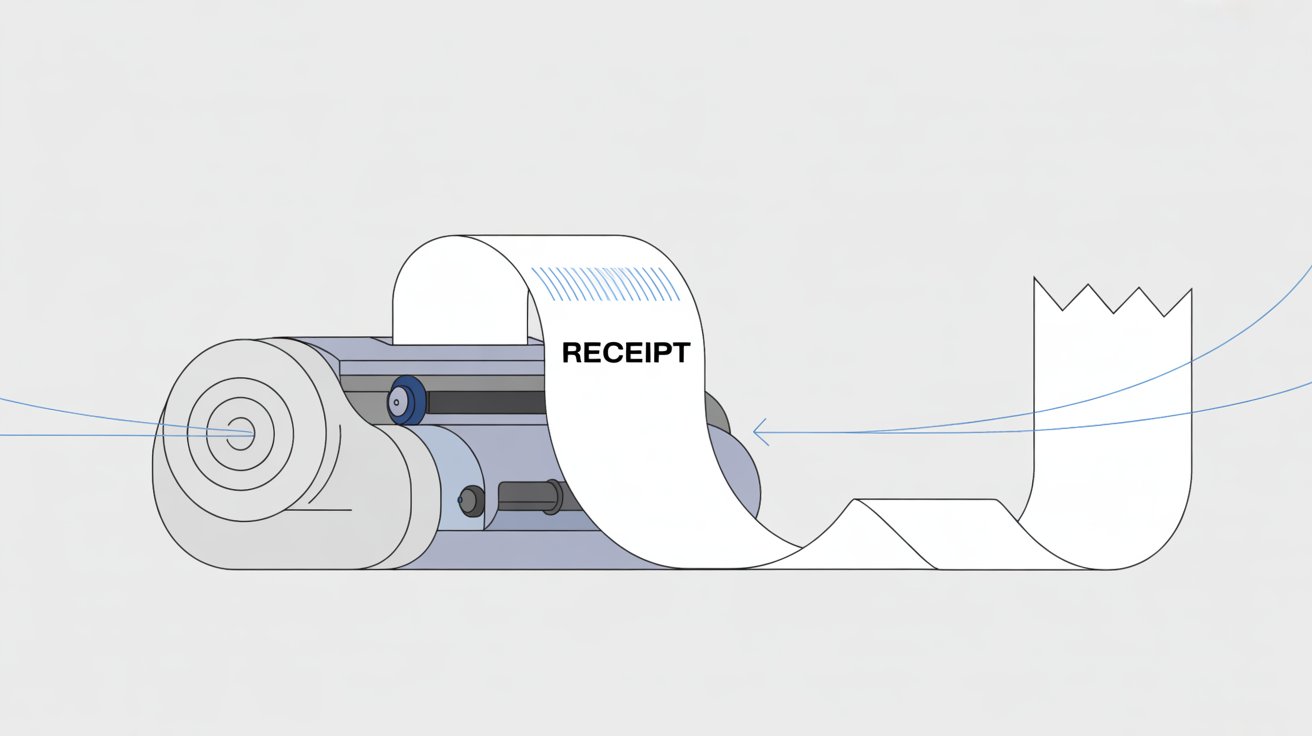
If you’ve ever paid for groceries, dined at a restaurant, or picked up a coffee, you’ve received a small printed slip known as a receipt. But have you ever wondered, how do receipt printers work? These machines may look simple, but they use clever technology to deliver fast, clear, and reliable receipts.
In this guide, you’ll learn:
- What receipt printers are.
- How different types (thermal & impact) work.
- Why businesses rely on them.
- Their advantages and disadvantages.
- Real-life examples of usage.
Let’s explain it step by step in easy words so that even beginners can follow.
🖨️ What Is a Receipt Printer?
A receipt printer is a small printing machine designed to print transaction slips for customers. Unlike regular office printers, receipt printers focus on speed, reliability, and low operating costs.
There are two main types:
- Thermal receipt printers – use heat-sensitive paper.
- Impact (dot matrix) receipt printers – operate with pins and ink ribbons.
🔎 How Do Receipt Printers Work?
The working process depends on the type of receipt printer. Let’s explore each in detail.
1️⃣ Thermal Receipt Printers
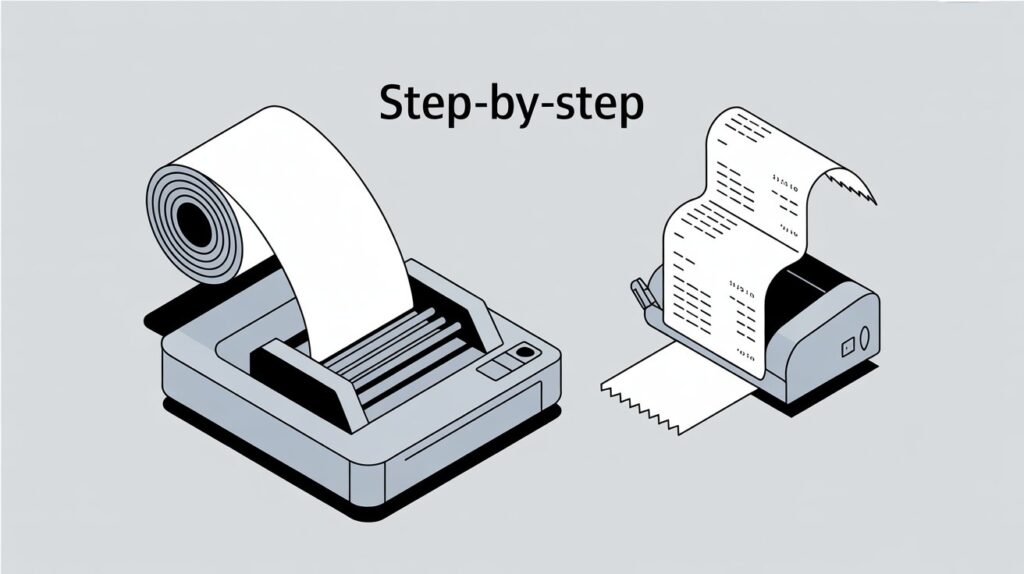
Most modern shops, restaurants, and ATMs use thermal printers.
How they work:
- A thermal printhead applies heat directly onto special heat-sensitive paper.
- The paper darkens where it is heated, forming text and images.
- The paper moves forward through the printer with a roller.
- An auto-cutter trims the receipt neatly.
👉 This means there’s no need for ink or toner.. Everything depends on heat and thermal paper.
2️⃣ Impact (Dot Matrix) Receipt Printers
Before thermal printers became popular, businesses used impact receipt printers.
How they work:
- Tiny pins strike an ink ribbon, pressing ink onto paper.
- The pins form characters and numbers in a dot matrix pattern.
- The paper is fed using gears and rollers.
- Many models print duplicate receipts using carbon paper.
👉 While slower and noisier, they are still used in places like banks and logistics where multiple copies are required.
📋 Thermal vs. Impact Receipt Printers
| Feature | Thermal Printers | Impact Printers |
|---|---|---|
| Speed | Very fast | Slower |
| Noise | Quiet | Noisy (clacking sound) |
| Ink Needed? | No | Yes (ribbon) |
| Paper Type | Heat-sensitive | Normal paper + ribbon |
| Durability of Print | Can fade over time | Long-lasting |
| Best For | Retail, restaurants, ATMs | Banking, warehouses, shipping |
⚡ Why Are Receipt Printers Important?
Receipt printers may seem like a small tool, but they play a huge role in businesses:
- 🛍️ Customer Proof – Provides evidence of payment.
- 📊 Business Records – Helps track sales and taxes.
- ⚙️ Efficiency – Fast printing reduces checkout lines.
- 💰 Cost-Effective – Lower maintenance compared to traditional printers.
Without them, transactions would be slower and less reliable.
✅ Advantages of Receipt Printers
- 🔹 Fast output – Instant printing at checkout.
- 🔹 Compact design – Small enough to fit anywhere.
- 🔹 Low maintenance – Thermal models don’t need ink.
- 🔹 Integration – Works with POS (Point-of-Sale) systems easily.
❌ Disadvantages of Receipt Printers
- ⚠️ Thermal prints fade – Heat and sunlight can erase text over time.
- ⚠️ Special paper needed – Thermal printers only work with thermal paper.
- ⚠️ Noise in impact models – Not ideal for quiet environments.
- ⚠️ Limited graphics – Not suitable for high-quality image printing.
🏪 Where Are Receipt Printers Used?
You encounter receipt printers almost every day. Common examples include:
- 🛒 Retail stores – Printing shopping receipts.
- ☕ Cafes & restaurants – Printing order slips and bills.
- 🏧 ATMs – Printing balance and withdrawal slips.
- 🚚 Logistics – Printing delivery and shipping receipts.
- 🎟️ Events – Printing entry tickets.
🛠️ How Does Thermal Receipt Paper Work?
Thermal receipt printers rely on specially coated paper.
- The paper has a heat-sensitive chemical layer.
- When heat from the printhead touches the paper, it turns black at that spot.
- This creates text, barcodes, and logos without ink.
👉 That’s why thermal receipts can fade if exposed to sunlight or heat for too long.
🌟 Benefits of Thermal Receipt Printers
- 📌 No ink or ribbon costs.
- 📌 Quiet and fast operation.
- 📌 High reliability (few moving parts).
- 📌 Sharp printing for barcodes and QR codes.
⚖️ When to Use Impact Printers Instead
Even though thermal printers dominate, impact printers are still useful when:
- You need duplicate copies (carbon paper printing).
- You want long-lasting receipts (not prone to fading).
- Your work environment is dusty or hot where thermal paper may fail.
🧩 Summary
So, how do receipt printers work?
- Thermal printers use heat on special paper—fast, quiet, no ink required.
- Impact printers use pins and ink ribbons—slower but long-lasting.
- Both types feed paper through rollers and often include auto-cutters.
Receipt printers are essential in retail, banking, restaurants, and logistics. Without them, businesses couldn’t provide proof of transactions as efficiently.
❓ FAQs About Receipt Printers
1. How does a thermal receipt printer work?
A thermal receipt printer uses a heated printhead that reacts with thermal paper to create images or text—no ink required.
2. Do receipt printers need ink?
Thermal printers don’t need ink, while impact printers use ink ribbons.
3. Why do some receipts fade quickly?
Receipts printed on thermal paper fade when exposed to heat, sunlight, or friction, which affects the chemical coating.